
Palliative care
-
Northern Europe
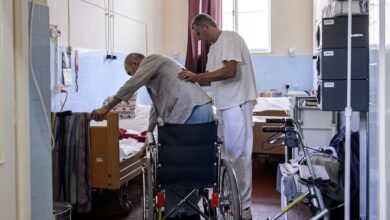
Danish doctors against euthanasia: The answer to suffering must always be care
The debate on euthanasia is in full swing in Denmark. Doctors have now written an open letter in protest against the government's plans. The physicians, specialised in pain relief, criticise the support of Prime Minister Mette Frederiksen for active euthanasia, Kristeligt Dagblad writes. The Danish government attempts to introduce active…
-
Central Europe

German theologians see no need for new end-of-life law
Germany does not have to introduce a new law on assisted suicide. Theologians Reiner Anselm and Peter Dabrock do not think any existing end-of-life proposals will help suicidal people. For months German politicians have been working on a new law on assisted suicide. Three proposals have been tabled. However, according…
-
Western Europe

French government advisors in favour of self-determined death
The French advisory body pleads for better palliative care and for the liberalisation of self-determined death. It believes that the two are not mutually exclusive. The Economic, Social and Environmental Council (Cese) met on Tuesday to vote on a statement called “End of life: changing the law?” A vote showed…
-
Western Europe

Final vote confirms: French citizens' convention supports euthanasia
The French citizens’ convention has voted definitively in favour of legalising self-determined death. The final vote confirms that 76 per cent is in favour of active assistance in dying. On Sunday, the French citizens' council voted on the issue of self-determined death for the last time. They submitted their final…
-
Western Europe
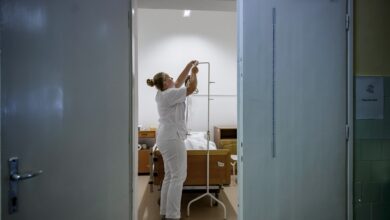
French End-of-Life commission wants better access to palliative sedation
The evaluation commission on the End-of-Life issue in France presented its findings last Wednesday. One of their suggestions is to give terminal patients better access to palliative sedation. The committee's mission was to evaluate the so-called “Clays-Leonetti law” from 2016, in which the rights of people at the end of…
-
Western Europe
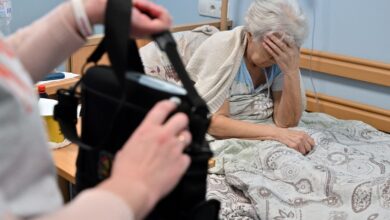
Dutch doctors worry palliative sedation becomes the norm at the end of life
More and more people pass away while sleeping deeply. Dutch doctors worry that palliative sedation will become a new norm in end-of-life care. “It seems that dying in your sleep becomes the new normal”, hospice medic Maarten Scholten wrote last year in the magazine Medisch Contact (Medical Contact). He argued…
-
Western Europe
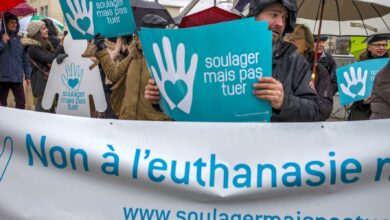
Deep divisions about euthanasia in French citizens' debate
The Citizens' Convention on the end of life in France shows deep divisions between participants. The 185 participants have fundamentally different views on the end of life. The Convention started on December 9 and will continue until March. It is part of President Macron's plan to liberalise euthanasia and assisted…
-
Northern Europe
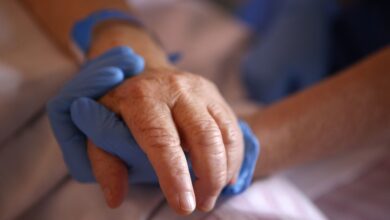
Päivi Räsänen wants all citizens to have right to palliative care
The Finnish Christen Democrat Päivi Räsänen has submitted a legal initiative to give all people the right to palliative care. National instructions and recommendations for palliative care cannot guarantee the right to high-quality hospice care for everyone, Räsänen argues. Therefore, she thinks it is necessary to introduce government measures that…
-
Southern Europe

Critical responses to Portuguese legalisation of euthanasia
Last week, the Portuguese Parliament approved end-of-life legislation. That means that assisted suicide and euthanasia are now decriminalised. However, not all responses are positive. The Portuguese Episcopal Conference (CEP) expresses its sadness after the vote on the proposal. That is reported by Ecclesia. The CEP consists of Catholic bishops. They…
-
Western Europe
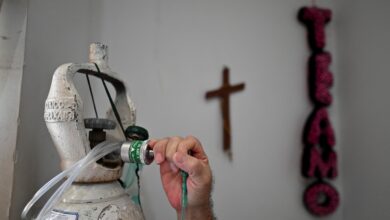
French bishops write letter on the end of life
How should Christians view euthanasia in the case of terminal illnesses? French bishops wrote a letter on the end of life to answer that question. “Death concerns each one of us. And it frightens us. Yes, we are not made for death.” That is the message that the bishops want…
- 1
- 2