The cold case team that did the criminal investigation after Anne Frank's betrayal says it was shocked by all the criticism of their book. It sees a witch hunt against their new book.
This is what chief investigator Pieter van Twisk says in a lengthy statement on the website of the cold case team on Thursday.
The statement deals point by point with the criticism that the book received last week because the Jewish notary Arnold van den Bergh in Amsterdam betrayed the Frank family.
The book, with the conclusion that it was 85 per cent sure that Mr van den Bergh was the traitor, was presented in several languages on January 17th. Immediately after the publication, Dutch historians shared doubt about the research. Van Twisk now says it was no historical research but a criminal investigation.
The statement is summarised by the Dutch press agency ANP published by Reformatorisch Dagblad.
Not more than main suspect
According to Van Twisk, Van den Bergh was not named the culprit in the investigation but “the main suspect in the most likely scenario”. The primary defence of the cold case team is that critics focus too much on the individual evidence. “We have often used the metaphor of the jigsaw puzzle; we collected so many pieces of the puzzle that the image on the puzzle became increasingly clear. (…) What the critics do is always take one piece and conclude on that basis that that is insufficient evidence for our conclusion.”
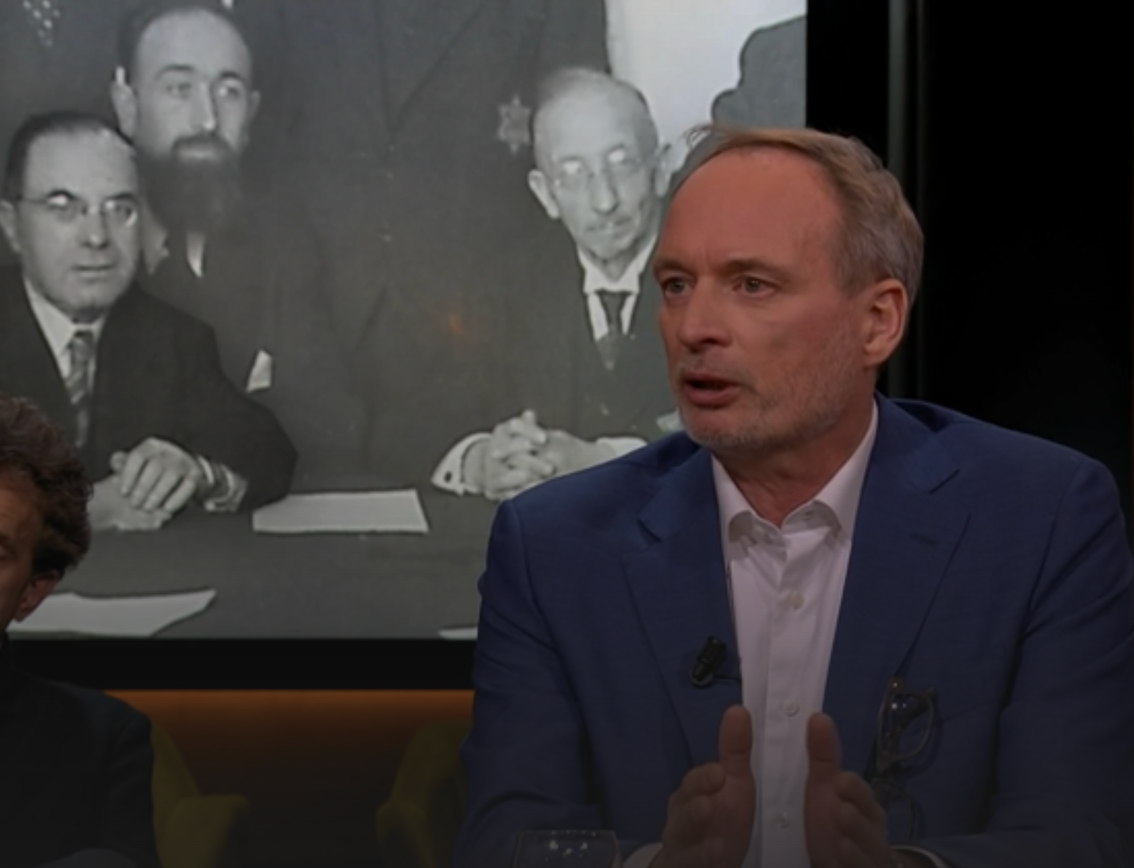
Researcher Pieter van Twisk in the Dutch TV show Op1, with Mr Van den Bergh left in the background. Screensh In the book, researchers argue that the Amsterdam notary wanted to protect his family by sharing a list of hiding addresses with the German occupier. However, several experts and organisations questioned that theory. In the statement, Van Twisk emphasises that they do have evidence for the list's existence. One of the pieces of evidence provided is an anonymous note that father Otto Frank supposedly received shortly after the war. It said that Van den Bergh had shared Frank's hiding place with the Germans and that he had shared more addresses. Critics say that this is not sufficient proof. However, according to Van Twisk, the note contained so much essential information that it had to have been written “by someone who knew what he or she was talking about”. “The contents of the note, the place and time at which it was delivered, the many witness statements about the existence of lists of people in hiding, the statements and behaviour of Otto Frank and the helpers, the behaviour of Van den Bergh and the overall context of a country at war, enslaved by an anti-Semitic ideology that excludes people, persecutes them, sets them against each other and ultimately destroys them etc. etc. All this together gives reasonable grounds for suspicion.” Research with great integrity Earlier, Van Twisk stressed that the cold case team did not carry out a historical investigation but a criminal investigation. According to Van Twisk, there is now “a kind of strange fuss” about the book he and his team have “spent five years researching on, with great integrity, and have unearthed a great deal”. Publishing house Ambo Anthos, which printed the Dutch version of the book, stated that it would postpone extra printings of the book pending more explanation from the investigation team. This week, the European Jewish Congress (EJC) asked the international publisher, Harper Collins in New York, to do likewise.
Researcher Pieter van Twisk in the Dutch TV show Op1, with Mr Van den Bergh left in the background. Screensh In the book, researchers argue that the Amsterdam notary wanted to protect his family by sharing a list of hiding addresses with the German occupier. However, several experts and organisations questioned that theory. In the statement, Van Twisk emphasises that they do have evidence for the list's existence. One of the pieces of evidence provided is an anonymous note that father Otto Frank supposedly received shortly after the war. It said that Van den Bergh had shared Frank's hiding place with the Germans and that he had shared more addresses. Critics say that this is not sufficient proof. However, according to Van Twisk, the note contained so much essential information that it had to have been written “by someone who knew what he or she was talking about”. “The contents of the note, the place and time at which it was delivered, the many witness statements about the existence of lists of people in hiding, the statements and behaviour of Otto Frank and the helpers, the behaviour of Van den Bergh and the overall context of a country at war, enslaved by an anti-Semitic ideology that excludes people, persecutes them, sets them against each other and ultimately destroys them etc. etc. All this together gives reasonable grounds for suspicion.” Research with great integrity Earlier, Van Twisk stressed that the cold case team did not carry out a historical investigation but a criminal investigation. According to Van Twisk, there is now “a kind of strange fuss” about the book he and his team have “spent five years researching on, with great integrity, and have unearthed a great deal”. Publishing house Ambo Anthos, which printed the Dutch version of the book, stated that it would postpone extra printings of the book pending more explanation from the investigation team. This week, the European Jewish Congress (EJC) asked the international publisher, Harper Collins in New York, to do likewise.