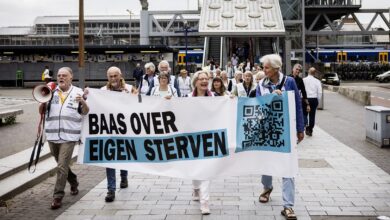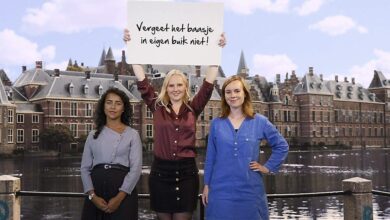
The number of Dutch people who refuse to donate organs after their death grows faster than the number of people who are willing to do so. In the so-called Bible-belt, the willingness is quite low.
New statistics from the Dutch Central Desk of Statistics (CBS) show that.
Since 2020, the Dutch law determined that anyone who has not registered his choice concerning organ donation did not object to becoming one. That is reported by the Reformatorisch Dagblad. Since then, about 3 million people have registered their choice, compared to before.
Of the people who registered their choice, almost 100,000 said not to be willing to donate their organs. That is more than four times as many as the number of people who said to be willing to donate their organs after their death (21,000).
Christian communities
Remarkable is that willingness is low in the conservative Christian communities. Dutch sociologist Tanja Traag suspects that religious convictions play a role in the decision not to do so. “We cannot test why people make a decision, but I can imagine that people want to have a complete body when they pass away. That can be due to convictions about life after death or believing that the body will arise again one day.”
Furthermore, the percentage of people registering their choice of organ donation is the lowest among young people. According to the statistics, about 40 per cent of those between 18 and 20 years old did not make a choice yet. Traag explains that it is likely that young people think organ donation does not concern them yet. “Therefore, it is important to draw attention to the register.”